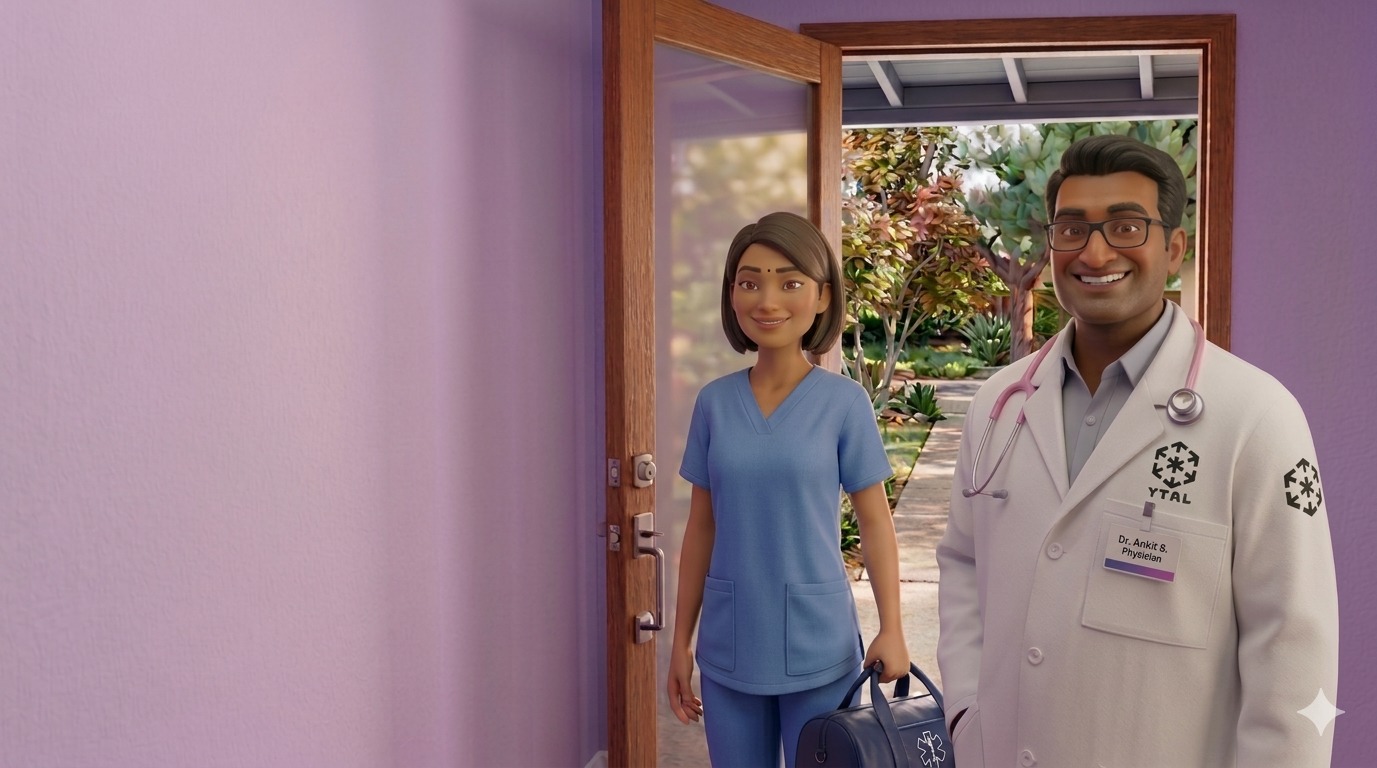
Step 01
01A nurse comes to your door.
A YTAL-trained nurse visits the patient at home, checks vitals, understands the week, and captures what usually gets lost between appointments.

A real nurse, your doctor, AI monitoring, and your family — working together where you live.
The four pillars are presented as one family's care arc — nurse, family, doctor, then Aira between visits.
A YTAL-trained nurse visits the patient at home, checks vitals, understands the week, and captures what usually gets lost between appointments.
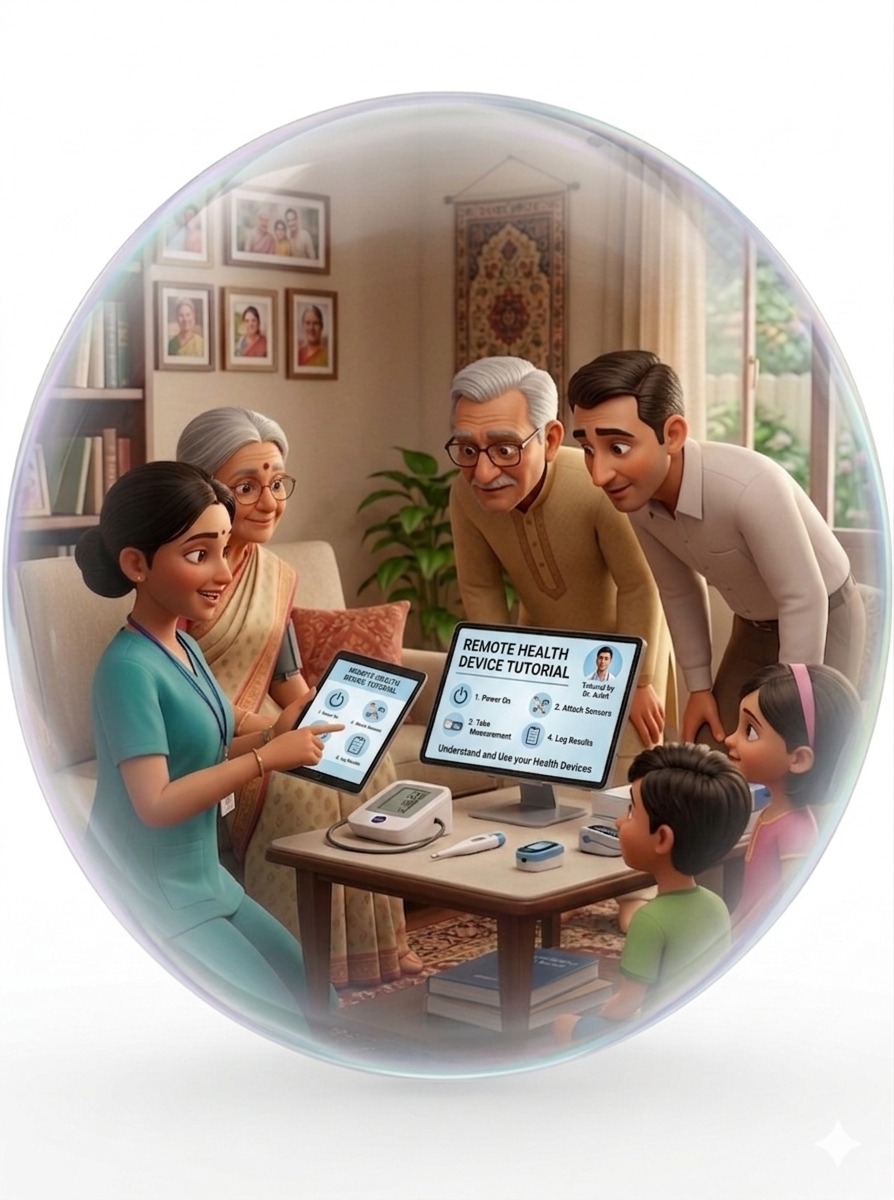
Caregivers get clear, plain-language guidance so the home team knows what to watch, when to rest, and when YTAL will escalate.
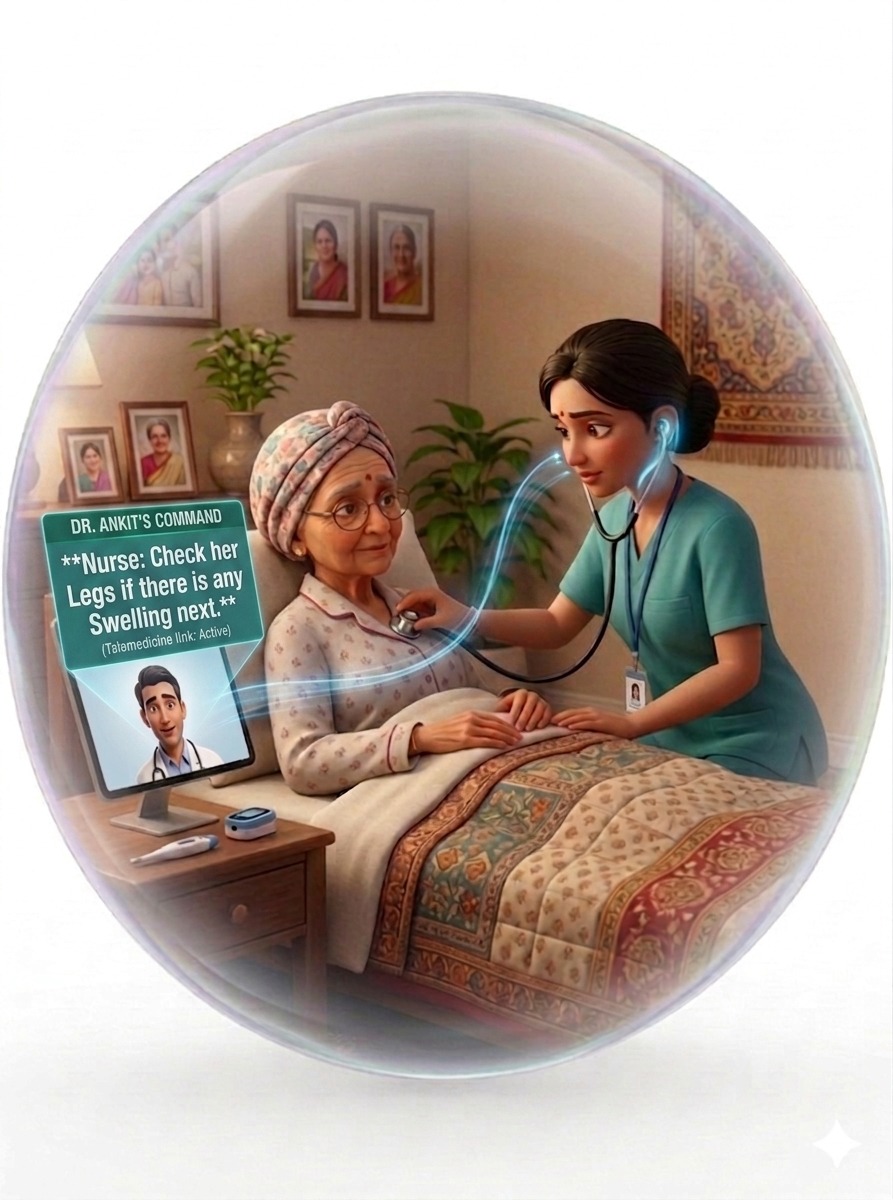
A doctor reviews structured data instead of scattered notes, signs the Smart Exam, and keeps clinical decisions anchored in evidence.
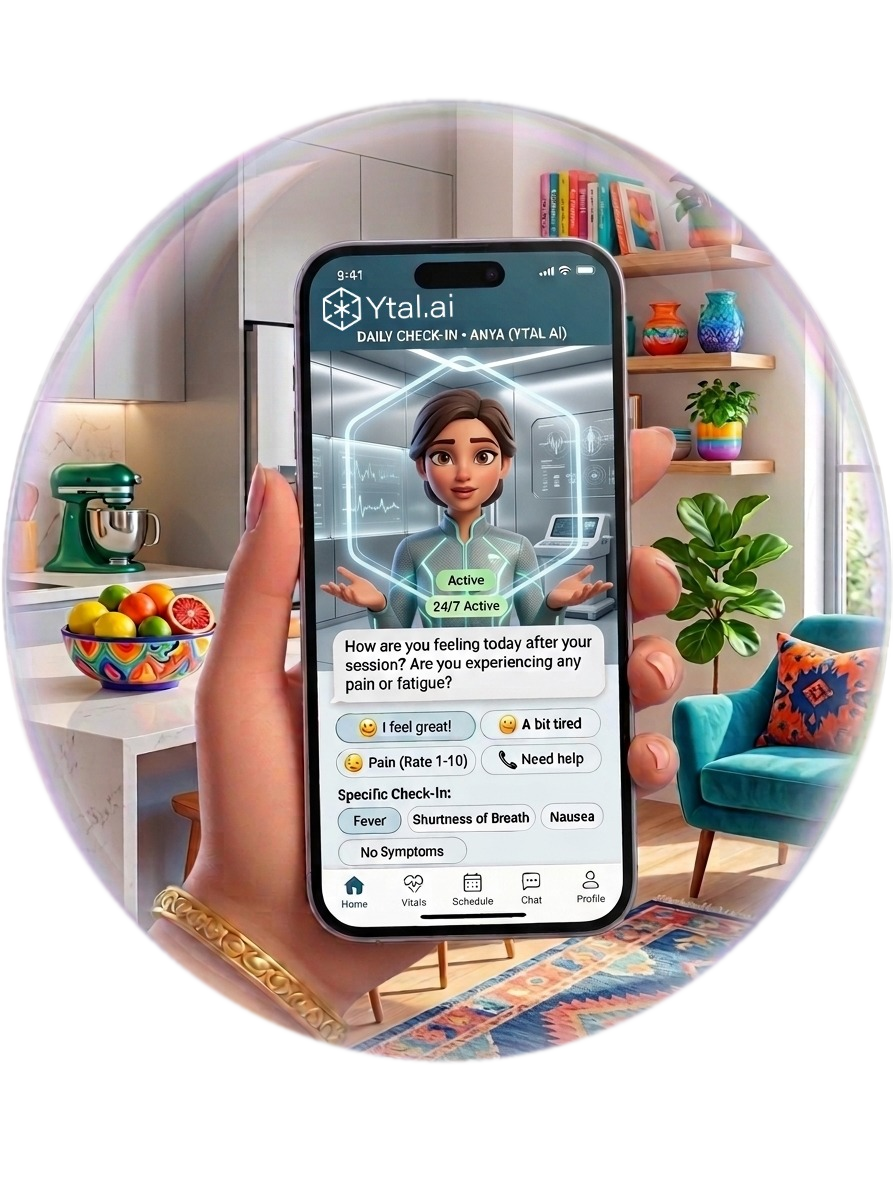
Aira checks in gently between visits, detects patterns, supports routines, and keeps the human team close without making care feel mechanical.
AI-guided vitals plus a nurse's hands — clinical-grade data your doctor signs in under three minutes.
Febrile neutropenia caught over six days, no ICU needed.
HRV drop, HR rises
Aira asks temp
Family: fatigue
Wearable flags temp
Nurse call
Nurse exam
Vitals worsen
AI alert: neutropenia
Doctor: eval + CBC
Admitted, no ICU
A remote monitoring system that detects high-risk symptom clusters across chronic diseases — cancer, heart failure, diabetes, hypertension, asthma — linked with each patient’s treatments and ongoing medication, escalating complications early while they recover at home.
Start simple. Add support only when the care context needs it.
For families who need a gentle remote-care layer at home.
The recommended plan for active treatment and frequent symptom changes.
For high-touch care coordination with deeper clinical visibility.
Connected vitals kit for high-signal monitoring.
Doctor consults with structured pre-read data.
Extra nurse or care-coordinator support when needed.
A real nurse, your doctor, AI monitoring, and your family — together at home.